

Silk India Exhibition: Explore Traditional Indian Handloom and Silk Collection in Nagpur
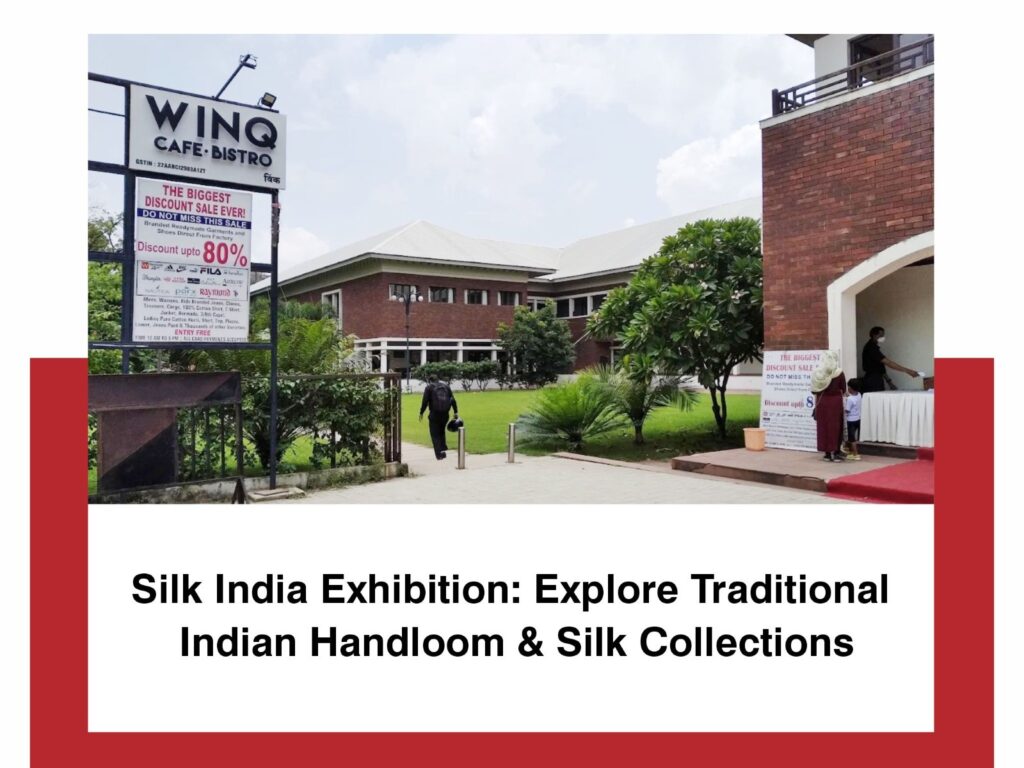
Ask any Indian woman about her favourite saree, and there’s a good chance she’ll describe a silk one: maybe her mother’s Kanjivaram, a Banarasi from a wedding, or a Paithani that only comes out at festivals. Silk isn’t just fabric in our homes. It carries memories.
If you live in Nagpur and love that feeling, the Silk India Exhibition in Nagpur is a place you’ll want to visit. It brings weavers and craftspeople from different corners of the country under one roof, so you can see, touch, and buy traditional handloom and silk without travelling to Varanasi, Kanchipuram, or Bhagalpur.
What Is the Silk India Exhibition?
The Silk India Exhibition is a showcase of India’s weaving traditions. Many stalls are run by artisans or weaver cooperatives, so you can talk to the people who actually make the fabric. You can ask how long a saree takes to weave, what the motifs mean, and how to tell real silk from a fake.
For people in Nagpur, this matters. A handloom exhibition in Nagpur like this gives you variety and fair prices, and the chance to buy something genuine instead of a machine-made copy.
Handloom and Silk Collections You Can Explore
Here’s a taste of what you can usually expect.
Banarasi Silk: Heavy zari work, rich colours, and detailed floral or paisley patterns. These are the first choice for bridal wear and weddings.
Kanjivaram Silk: Known for thick, durable silk and bold temple borders. A good Kanjivaram can last for decades.
Paithani Sarees: Close to home for Maharashtra. Paithani is famous for its peacock and lotus designs and its glowing, jewel-like colours.
Tussar and Raw Silk: Lighter, earthy, and perfect for office wear or summer functions.
Chanderi and Maheshwari: Soft, airy, and elegant, ideal when you want something festive without the weight.
Bhagalpuri and Mysore Silk: Smooth, simple, and great for everyday dressing.
Beyond sarees, many exhibitors also bring dupattas, stoles, suit material, dress fabric, and home furnishings in handloom cotton and silk.
Why Choose Handloom Over Mass-Produced Fabric?
A handloom piece is made slowly, by hand, on a wooden loom. Because of that, no two pieces are exactly alike. You may notice a tiny irregularity in the weave, and that is not a flaw. It is proof that a person made it.
There are practical reasons too:
- Better quality: Handloom fabrics usually breathe better and feel more comfortable.
- Long life: A well-woven silk saree can be passed down for generations.
- Supporting artisans: Your money goes closer to the weaver’s family, helping keep a centuries-old craft alive.
- Cultural value: Every region has its own pattern language, and wearing it is a way of carrying that history.
Tips for Buying Silk at an Exhibition
Shopping at an exhibition can feel overwhelming, so keep these simple tips in mind.
- Do the burn test knowledge: Real silk smells like burnt hair when a loose thread is burned and leaves a crushable ash. Synthetic fabric melts into a hard bead. Ask the seller to demonstrate if you’re unsure.
- Check the zari: Ask whether it is pure zari or imitation, and look at the back of the work for neat, even finishing.
- Look for certification: Silk Mark and Handloom Mark labels are good signs of authenticity.
- Hold it up to the light: Pure silk has a soft, natural sheen that shifts with the angle, unlike the flat shine of synthetic.
- Ask questions: Good sellers are proud of their work and happy to explain it.
- Compare before buying: Walk through the full exhibition once before deciding. You’ll spot better value.
Who Should Visit?
- Brides and families planning wedding shopping
- Anyone looking for festive outfits for Diwali, Navratri, or Ganesh Chaturthi
- Gift hunters who want something more meaningful than the usual
- Fashion students and designers searching for inspiration
- Anyone curious about how traditional Indian textiles are made
Even if you don’t plan to buy, walking through the colours and textures is an experience in itself.
Make the Most of Your Visit
Go on a weekday afternoon if you want a calmer shopping experience, as weekends tend to get crowded. Carry a bag, some cash for smaller stalls, and your phone for photos. Wear comfortable footwear, because you’ll be walking and browsing for a while. Many exhibitions also offer festival discounts and special offers on selected collections, so keep an eye out.
Final Thoughts
Handloom and silk are a living tradition, passed from one pair of hands to the next. The Silk India Exhibition in Nagpur gives you a rare chance to meet that tradition directly, to see the loom’s work up close, and to take home something that is truly yours.
So the next time you’re planning a wedding outfit, a festival look, or simply a treat for yourself, skip the shortcut and visit the exhibition. Your wardrobe, and the weavers who made it, will thank you.